Math the Infinite Journey Design: Logic Meets Artistry
There's a quiet power in mathematics that goes beyond equations and calculations. It's the elegance of a perfectly balanced geometric form, the mystery of an irrational number, and the satisfaction of solving a complex problem. For designers and creatives, translating that intellectual beauty into visual form is a unique challenge—and an incredible opportunity. This is where a thoughtfully crafted design asset, one that captures the essence of logic and endless exploration, becomes invaluable. It’s not just about a pi symbol; it’s about communicating a mindset of curiosity and precision.
Visual Language of Logic and Discovery
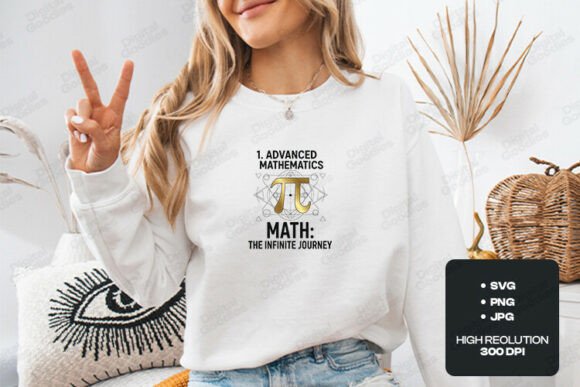
What makes a design centered on mathematical themes so compelling? It’s the inherent structure and meaning embedded within the visuals. The bold pi symbol (π) acts as an immediate, recognizable anchor—a universal shorthand for mathematics itself. Surrounding it, geometric elements like fractals, tessellations, or abstract grids create a sense of depth and complexity. These aren't random shapes; they suggest patterns, proofs, and the beautiful order found within chaos. The color palette often leans into clean contrasts—think deep navy against crisp white, or metallic silver on matte black—reinforcing clarity and focus. This kind of design speaks to an audience that appreciates intellect, problem-solving, and the journey of discovery. It’s perfect for brands or projects that want to project innovation, meticulousness, and a forward-thinking vision.
From Concept to Commercial Application
Having a powerful visual concept is one thing; applying it effectively across different mediums is another. The true value of a versatile design asset like this lies in its adaptability. Consider the practical files included: a high-resolution PNG with a transparent background allows for seamless layering onto photographs, colored backgrounds, or complex layouts without unsightly borders. A fully scalable SVG file is a game-changer for large-format printing—think wall murals, trade show banners, or oversized apparel prints—ensuring every line remains crisp and clear at any size. The high-resolution JPG provides a ready-to-use option for digital platforms or standard prints where a background is desired.
This trio of file types unlocks a world of creative possibilities for your projects:
- Apparel & Fabric Prints: Create standout t-shirts, tote bags, or scarves that appeal to educators, students, engineers, and anyone who loves science and logic. The design’s clarity holds up beautifully on textiles.
- Home Décor & Wall Art: Produce inspiring posters, canvas prints, or even metal signs for a study, office, or classroom. It transforms a space into a haven for thinkers and creators.
- Paper Goods & Packaging: Design unique greeting cards, notebook covers, or product packaging for items like tech gadgets, educational kits, or artisanal goods. The geometric precision adds a premium, thoughtful feel.
- Digital & Print Marketing: Use it in social media graphics to announce new products, in blog headers for STEM-focused content, or as a recurring visual motif in a company newsletter to build brand recognition.
- Sublimation & Craft Projects: The files are optimized for sublimation printing on mugs, coasters, and phone cases, as well as for creating stickers, decals, and labels for planners or products.
Building a Cohesive Brand Identity
For entrepreneurs and small business owners, consistency is the bedrock of brand recognition. Integrating a distinctive design element like "Math: The Infinite Journey" across multiple touchpoints creates a powerful visual shorthand. Imagine a tech startup using this as a subtle watermark on their presentations, as the favicon on their website, and as the centerpiece of their packaging. It immediately communicates their core values of innovation and intelligence without a single word of explanation. When selecting typography to accompany such a strong graphic, consider pairing it with a clean, modern sans-serif font for body text to ensure readability, or a sleek serif for a more traditional, authoritative feel. The key is to let the mathematical design be the hero, supported by typography that complements rather than competes.
Practical Considerations for Implementation
Before finalizing any design asset for your project, a few practical steps ensure success. First, always review the licensing. A design intended for commercial use—like selling merchandise or using it in a client’s logo—requires a license that explicitly permits such activities. Second, test the design in context. Mock it up on your intended product or platform. Does the pi symbol remain legible when scaled down for a business card? Do the geometric details get lost on a busy background? Finally, think about your audience. This particular design resonates deeply with a specific niche. Using it for a children’s tutoring service is a natural fit; using it for a bakery might require more creative integration to connect with the right customers. The goal is alignment between the visual message and the brand’s story.
In a world saturated with generic visuals, a design that embodies the profound beauty of mathematics offers a distinct voice. It’s more than decoration; it’s a declaration of values—curiosity, precision, and the endless pursuit of knowledge. Whether you’re building a brand, crafting a product, or creating content, leveraging such a thoughtful asset can elevate your work from simply being seen to being understood and remembered.